Project Success Means Planning for What You Can’t Predict

No one leading a project expects everything to go exactly as planned. What separates high-performing teams from the rest is not how well they avoid change, but how well they respond to it.
In Part IV of the Crevay Project System, Dealing With Change, we examine something that often goes unnamed in project playbooks: adaptive capacity. This is the ability of a team or organization to adjust effectively when circumstances shift, without losing sight of the intended value. In today’s environment, that skill is no longer optional. It’s foundational.
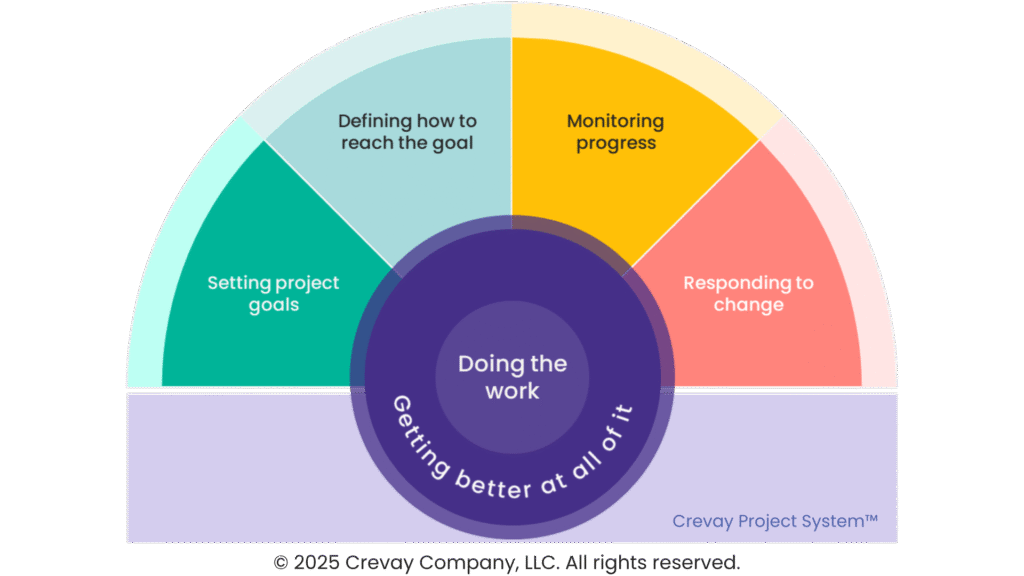
All projects are acts of change. They create new tools, processes, events, and awareness. But along the way, change does not just come from your goals. It comes from the outside and the inside. Prices shift. People leave. Regulations evolve. As teams work, they learn, and that learning reshapes the path forward. All of that demands response—not just reaction, but thoughtful, grounded recalibration.
The first step is mindset. Teams that do well with change do not treat every deviation as a red flag. They understand that variation is part of the process. They get curious. They look for patterns. They distinguish between natural fluctuations and systemic problems. That discipline allows them to adapt in ways that preserve value instead of scrambling for control.
It also means knowing what kind of change you’re dealing with. Some change stems from within the project: refinements to the approach, updated understanding of stakeholder needs, or lessons learned as the work unfolds. Other changes are external and unpredictable. The key is not to over-plan but to be prepared. That preparation looks like clear roles, shared priorities, early-warning conversations, and space to adjust without panic.
When leaders treat change as a threat, teams brace. They wait for direction. Progress slows. When leaders model adaptive thinking, people stay engaged. They see change as an opening—not a problem to solve, but a prompt to realign and refocus.
If your goal is value delivery, then your system must support adjustment without confusion. That requires more than tools. It requires the ability to pause, observe, and make informed moves.
You cannot eliminate uncertainty, but you can lead your team to meet it with clarity and strength. That’s what real adaptive capacity looks like. And it is one of the most important capabilities a project team can develop.