Beyond the Checklist: How Great Teams Turn Every Project Into Growth Part V of the Crevay Project System™

Beyond the Checklist: How Great Teams Turn Every Project Into Growth Part V of the Crevay Project System™

Most project systems end when the deliverables are complete. Timeline, budget, scope. Check, check, check.

But if that is where your process stops, you are missing the point.

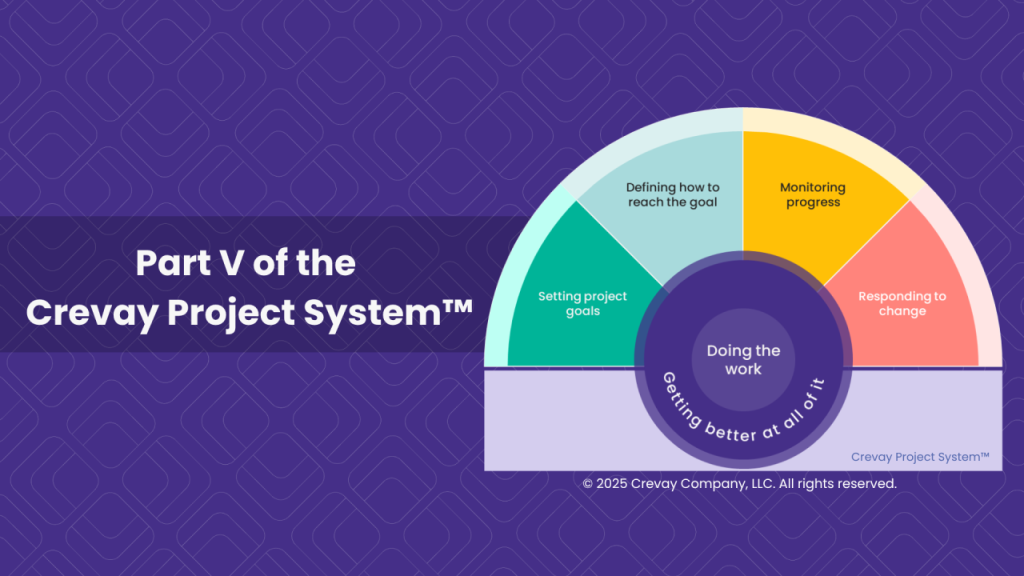
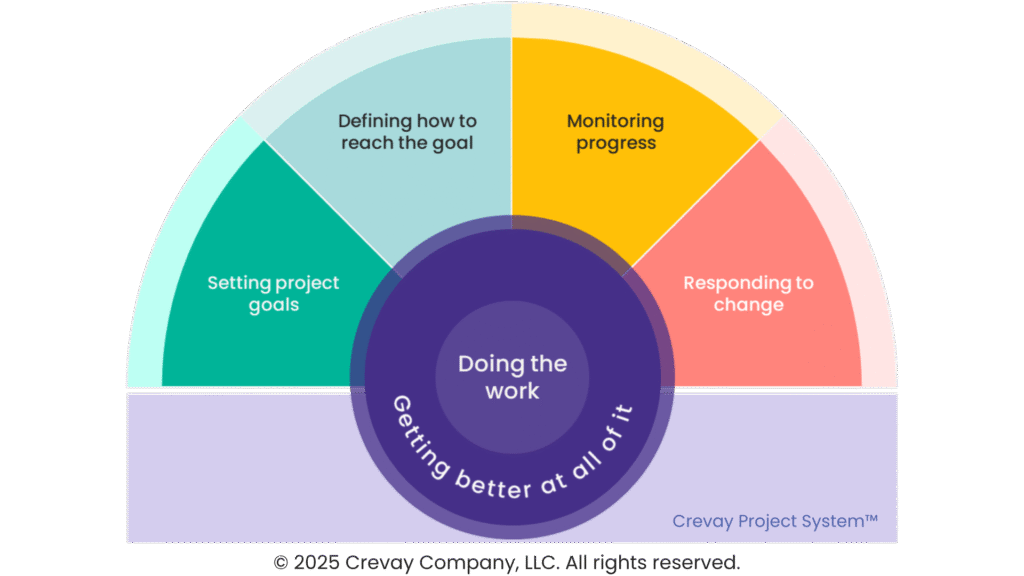
The final step in the Crevay Project System is not about wrapping up a checklist. It is about making sure your organization knows more, adapts faster, and performs better the next time. We call it Getting Better at All of It because that is the real goal. Projects are not just tools for getting work done. They are vehicles for building capability.
Why does this step matter?

In the rush to move on, most teams skip the part where the biggest value lives. They gather lessons learned, maybe jot down a few notes, and close the folder. But reflection without action changes nothing.

This step is about transformation. Not of the project, but of the people, the systems, and the thinking behind it.

Projects surface things. They reveal where teams are strong and where they need help. They expose gaps in decision making, communication, and change readiness. When those insights are captured and built into how the organization works, you get better not just on the next project, but across the board.

You cannot improve what you do not see

The Crevay approach to this step begins with visibility. That means asking:

  • What actually happened?
  • Where were we clear, and where did confusion slow us down?
  • Did we hit the target, and if not, why?
  • What feedback did we ignore or delay?
  • What systems helped us move forward, and what systems got in the way?

These are not check-the-box questions. They are designed to make sure everyone involved, from decision makers to front-line contributors, has a shared and honest understanding of the project’s performance.

This is not about blame. It is about truth.

Build a feedback loop that works

Organizations that grow from project to project do one thing very well. They make learning routine. They do not treat feedback as a task. They treat it as a signal.

Part of that is structural. You need time set aside for review. You need a process for capturing what worked and what did not. But just as important is the culture around it. If people feel like admitting a problem will be held against them, they will stay quiet. And your next project will suffer the same issues.

Crevay helps organizations create review rhythms that feel safe, focused, and valuable. We look at what outcomes were achieved, what tradeoffs were made, and how the process shaped both. And we tie it back to your capability as an organization.

Performance is not personal. It is systemic.

When a project falls short, it is easy to assign the problem to individuals. A slow approval. A missed communication. An unclear owner.

But these are usually symptoms of something larger. The fifth step in the Crevay Project System invites teams to look at the system as a whole. Were people set up to succeed? Did the tools support the work? Did leadership model urgency and alignment?

When you improve the system, you lift the performance of every person inside it. That is how you scale quality.

Turn insights into upgrades

This step is not theoretical. It produces concrete recommendations for how your organization can strengthen its project capability.

Sometimes that means updating the way projects are scoped. Sometimes it means adjusting roles or resource planning. Sometimes it means refining how decisions are made or how handoffs are handled.

Whatever the insight, the point is this: reflection should always lead to action.

A post-project snapshot that shows what the project taught your team and where there is opportunity to get stronger. This is not a performance review. It is a growth map.

From one project to a culture of learning

Too often, organizations treat each project as an isolated effort. But when you apply what you learned from one project to the next, you create momentum. And when that becomes the norm, you do not just get better at projects. You get better at everything that supports them.

Strategy becomes clearer. Communication becomes faster. Execution becomes more reliable. And your people become more engaged because they can see how their work helps the organization evolve.

That is the real finish line of any project. Not a report or a rollout, but a stronger, smarter team.

Getting better at all of it is a choice

The fifth and final step of the Crevay Project System is an invitation. It asks, will you move on from the project or will you build on it?

Getting better at all of it is not a one-time review. It is a discipline. And it is one of the most valuable investments a team can make.

Because when you treat each project as a learning opportunity, you build a team that is not only prepared for what comes next but capable of shaping it.

Related Articles

Thank you for applying to the Pathfinders Lab!


Thank you for applying to the Pathfinders Lab. We’ve emailed a copy of your application to you for your records.

We review applications within 48 hours and will reach out personally to discuss next steps. If accepted, you’ll receive details about upcoming cohorts and scheduling options.

In the meantime, we invite you to join the Radical Projects Collective portal (free) — a space where project professionals connect and explore ideas related to the Lab.

Register here:
https://members.crevayco.com/register/free/

If you have any questions, feel free to reply to this email. We look forward to being in touch.

— Cheri Smith
Founder, Crevay | The Radical Projects Collective